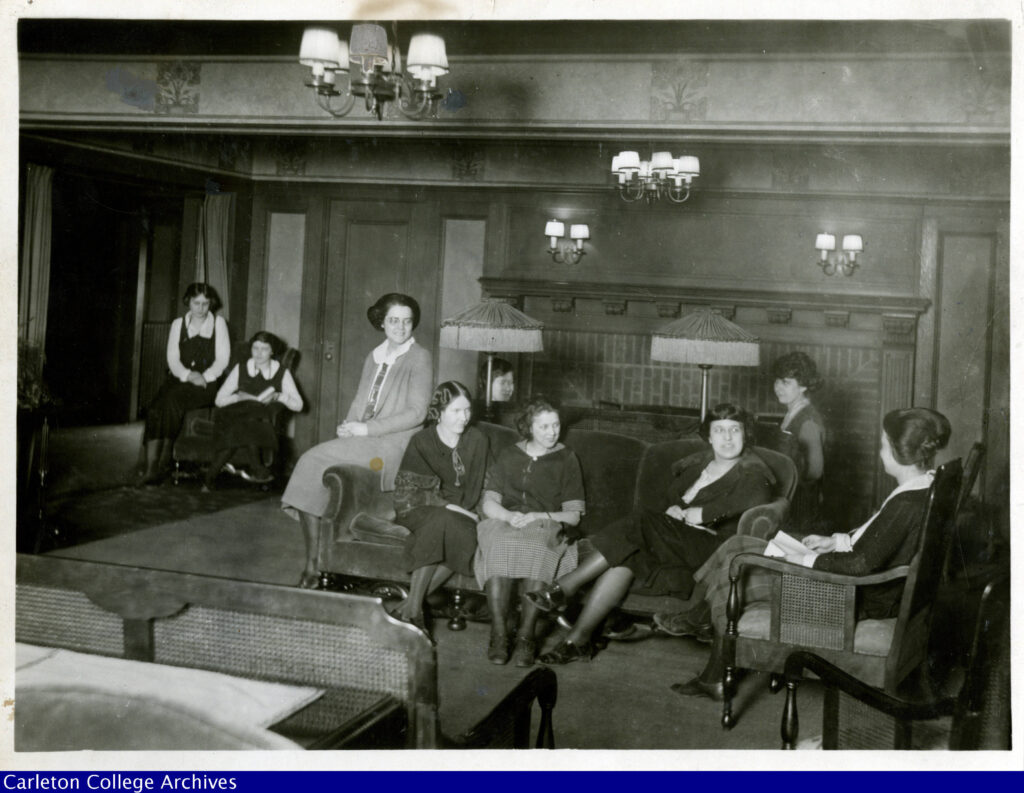
For my lab project this week, I used the DeOldify AI to colorize a picture of the Nourse Hall interior with nine women. The result was as good as I could have imagined, but it made me think about the ethical issues around using AI to alter photos. The AI did a great job of adding color, but it’s not really restoring the original image—it’s creating a new version of it. For example, the skin tones in the colorized photo are not exactly accurate. While the AI’s guesses were based on data, it made me realize how much room there is for mistakes when AI fills in the gaps.
This raises significant issues regarding the application of AI to historical imagery. While it’s exciting to see a photo come to life with color, it also raises the concern of whether we’re changing history. Lauren Tilton’s point about how AI shapes what historians find is relevant here:
“Artificial intelligence is increasingly behind tagging, classifying, organizing, and filtering decisions that shape which sources historians encounter.”
Lauren Tilton, “Relating to Historical Sources,”
AI’s role in colorizing images is similar to its effect on the way we find and interpret historical sources. Just like AI helps search engines decide what results we see, it affects how we view historical photos. Colorizing an image isn’t just adding color—it’s changing the way we see a past moment, potentially shaping how we understand it.
Sonja Drimmer also brings up an important point about AI’s nature:
“When AI gets attention for recovering lost works of art, it makes the technology sound a lot less scary than when it garners headlines for creating deep fakes that falsify politicians’ speech or for using facial recognition for authoritarian surveillance.”
Sonja Drimmer, How AI is Hijacking Art History, The Conversation
This highlights how AI can both help and harm. While colorizing photos may appear harmless, the same technology can be used to mislead people. As AI continues to shape how we view history, we must think carefully about its impact on how we understand the past.

Omeka Link: https://dgah.sites.carleton.edu/digtialobjects/admin/items/show/153
