“The problem is that the photocopiers were degrading the image in a subtle way, in which the compression artifacts weren’t immediately recognizable. If the photocopier simply produced blurry printouts, everyone would know that they weren’t accurate reproductions of the originals. What led to problems was the fact that the photocopier was producing numbers that were readable but incorrect; it made the copies seem accurate when they weren’t”
Ted Chiang
I am concerned about the psychological consequences of artificial intelligence use without transparency, the consequences of when people think content is accurate when it is not. In his article “ChatGPT Is a Blurry JPEG of the Web,” Ted Chiang likens AI to a malfunctioning Xerox photocopier. Chiang describes how the realisticness of the errors made them go easily unidentified. People exposed to realistic AI generated content, unaware that it’s artificial, could develop—consciously or unconsciously—a warped perception of what humans and life looks like. Social media contributes to a mass of psychological disorders (eating disorders, depression, anxiety, isolation) along with unhealthy body ideals and self-esteem issues by giving people the means to filter and manipulate their images and put forth content under the guise of being an accurate representation of their lives. Comparison is a natural human tendency. Comparing oneself to an artificial “normal” can be severely painful. AI expands people’s ability to manipulate “normal” and that poses big psychological consequences.
Ted Chiang goes on to describe how people are more impressed with lossy compression than lossless compression:
“ChatGPT rephrases material from the Web instead of quoting it word for word makes it seem like a student expressing ideas in her own words, rather than simply regurgitating what she’s read; it creates the illusion that ChatGPT understands the material”
Ted Chiang
Here, Chiang uses “illusion” to describe people’s perception of ChatGPT. In regards to image generation, this anthropomorphization that AI understands and the trust people place in AI concern me. AI manipulates content to fulfill requests, it is a human made algorithm and not all knowing. Hopefully, we are able to view the world and humans from an intuitive place within ourselves instead of through the lens of a faulty Xerox machine.
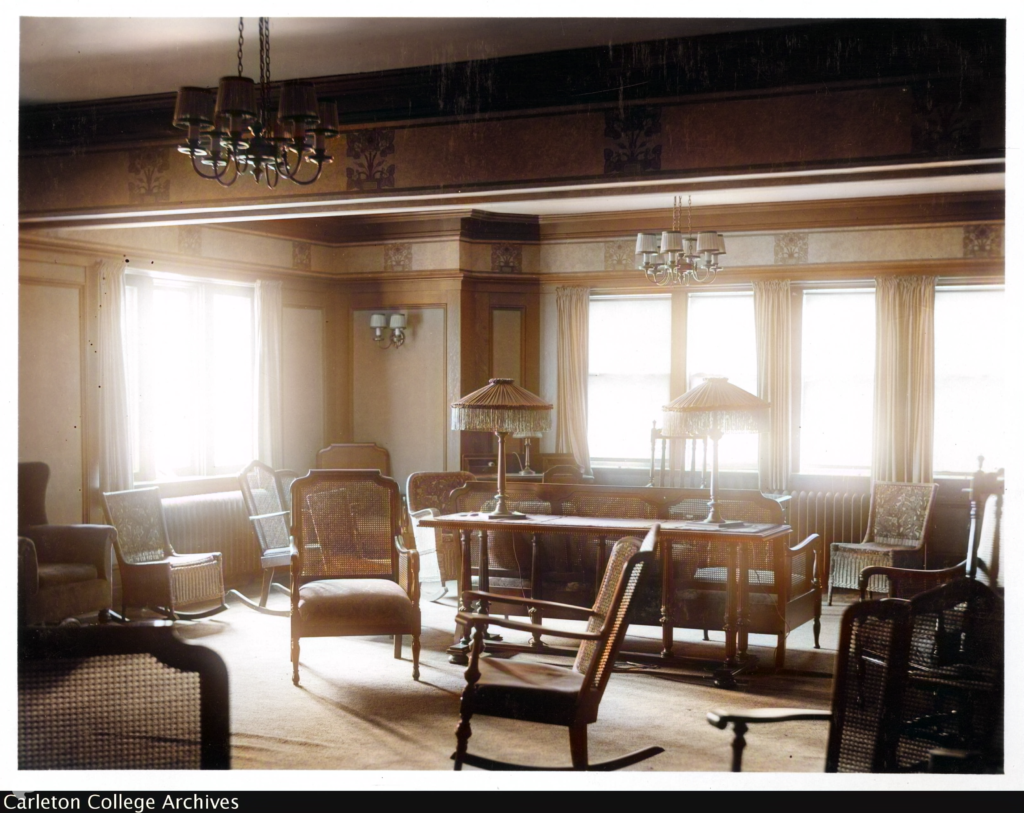
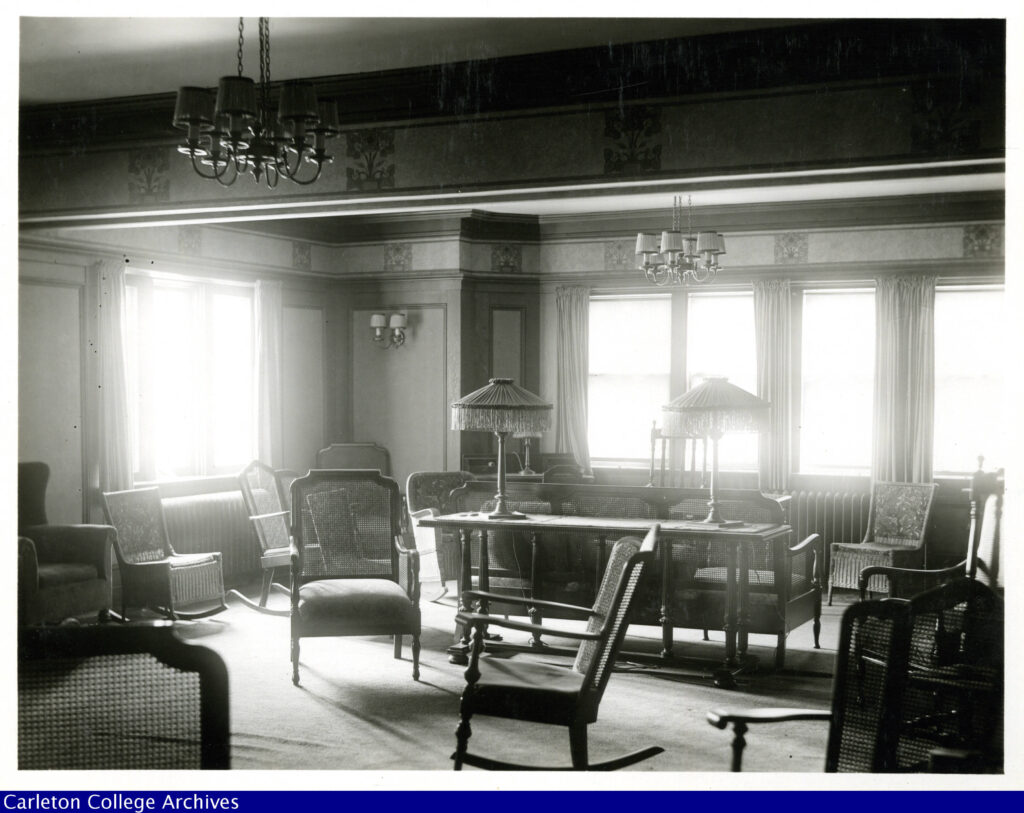
Digital Objects of Carleton Item: “New Women’s Dormitory / Nourse Hall interior: parlors”

Hello Sylvie! I really appreciated your analysis of what the potential impact could be of society’s increasing use of AI. I had not considered how artificial intelligence may contribute to certain psychological disorders by creating a false standard of what is “normal.” That is a real concern if modification using AI is not disclosed. Additionally, I agree with your point at the end that we should not view the world through the lens of AI. By doing so, we can lose sense of what makes us human.